本文目前僅有英文版本,本地化版本正在製作中。
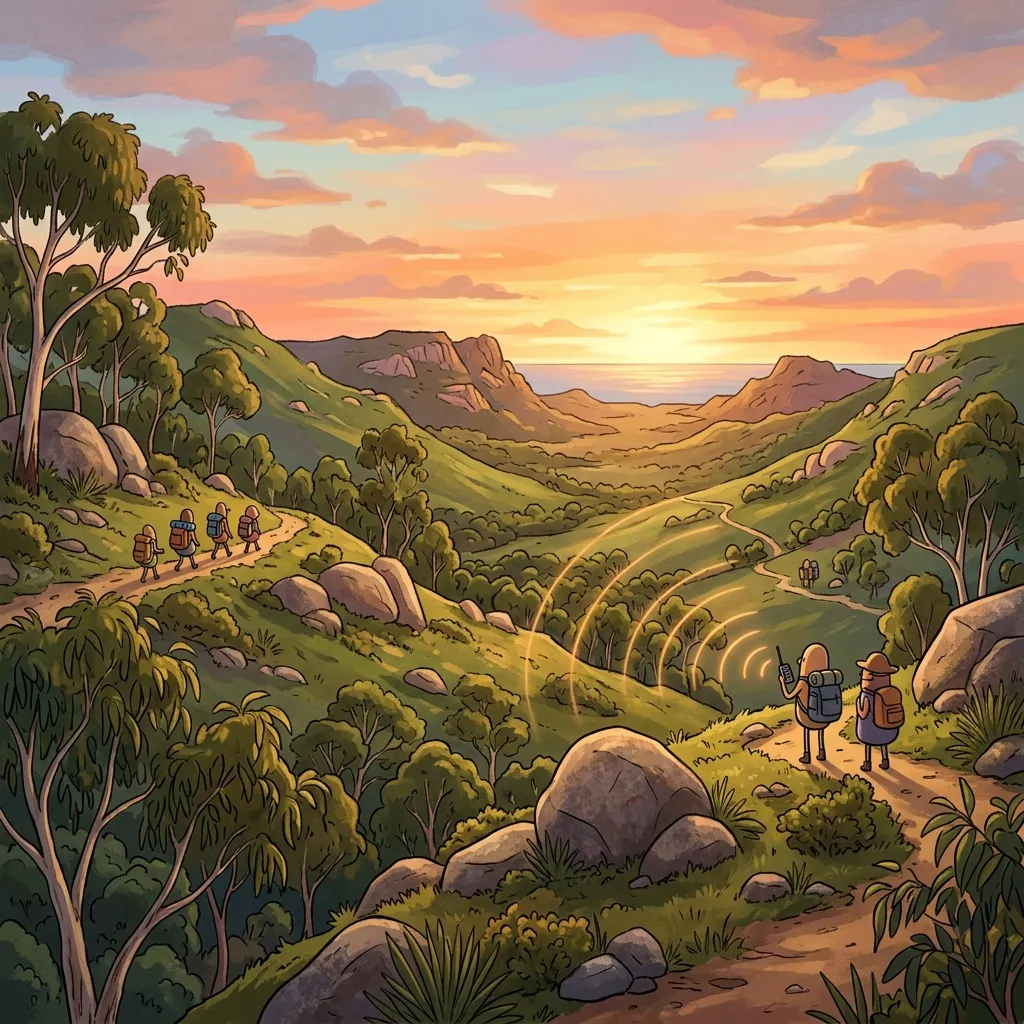
If Big Walk has one defining idea, it’s proximity voice chat. Understanding how sound behaves is the difference between a smooth expedition and total confusion.
How sound works in Big Walk
Your voice isn’t a clean broadcast to the whole team. It’s modeled like real sound in the world:
- Distance attenuation — the further away a teammate is, the quieter and less intelligible you become, until you fade out entirely.
- Reverb and echo — enclosed spaces such as tunnels, caves and hallways add echo, which can muddy speech.
- Occlusion — walls and terrain between you and a friend muffle your voice.
- Device coloring — talk over a walkie-talkie and your voice gets the classic crackly, compressed radio sound.
This is intentional friction. The challenge of being heard is what makes coordination feel meaningful.
Practical techniques
Manage your distance
Treat your group like a hiking party. If you need to give instructions, close the gap first. If you must stay spread out, plan for limited communication.
Use the right tool for the range
- Close range: just talk normally.
- Medium range, line of sight: a megaphone projects your voice across open ground.
- Long range, out of sight: a walkie-talkie reaches far, but expect crackle — keep messages short.
- No words needed: a flare or cowbell signals position or rallies the group instantly.
Speak for the medium
Short, clear, repeatable phrases survive distance and static far better than long sentences. “Stop. Wait there.” carries; a rambling explanation does not.
Embrace non-verbal channels
When voice fails, a whiteboard lets you draw a map or write a code, and gestures convey simple intent. Often the fastest “message” is a clear physical signal.
Why it’s worth the effort
Many co-op games hand you a frictionless team channel and forget about it. Big Walk turns communication itself into the puzzle, so a successful relay of information feels like a genuine accomplishment — and a botched one is usually hilarious.
Related: the full Tools & Toys list and our beginner’s guide.
最近更新: 2026-06-16