Cet article est actuellement disponible en anglais. Une version traduite arrive bientôt.
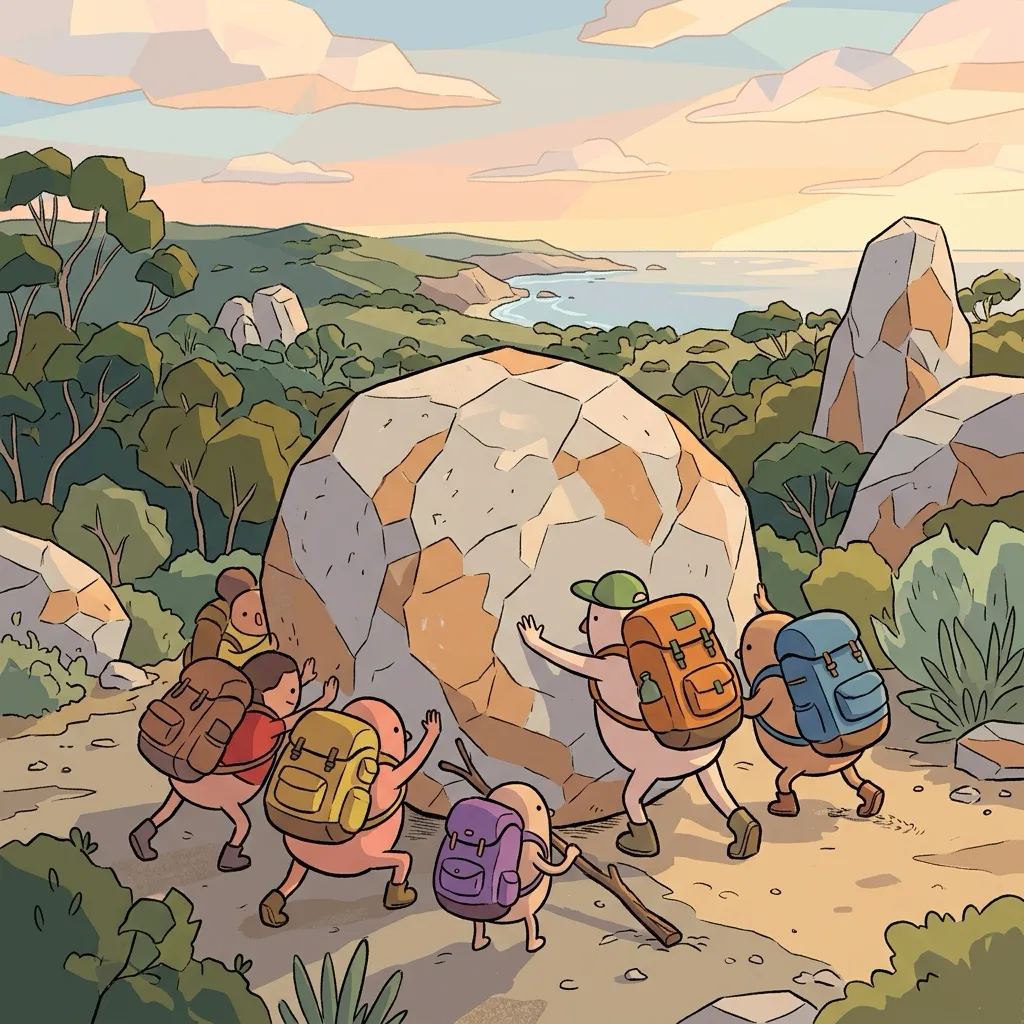
Big Walk lives or dies on teamwork. These tips will help any group — from a focused pair to a chaotic twelve — move and solve more smoothly.
1. Appoint a caller
In bigger groups, designate one person to coordinate. A single clear voice beats ten people talking at once.
2. Name your landmarks early
Agree on shared names for obvious features (“the lighthouse”, “the split tree”) so directions make sense without a shared camera.
3. Plan before you split
Voices fade with distance, so settle the plan before separating. Agree on a meeting point and a signal for “come back”.
4. Carry the right tool for the gap
Match your gear to the distance: talk up close, megaphone across open ground, walkie-talkie over long range, flare when words won’t reach.
5. Keep radio messages short
Walkie-talkie audio crackles. Trade paragraphs for keywords: “North. Two. Waiting.”
6. Use the whiteboard for anything complex
Codes, maps and sequences are far clearer drawn than described. The whiteboard is your friend for puzzles with lots of moving parts.
7. Confirm, don’t assume
Repeat instructions back before acting. A five-second confirmation saves minutes of backtracking.
8. Travel in a loose cluster
You don’t all need to be on top of each other, but stay within earshot unless a puzzle demands otherwise.
9. Let chaos be fun
When a plan collapses, lean into it. The funniest, most memorable moments come from miscommunication — that’s a feature, not a bug.
10. Take breaks together
The world stays open as a hangout space. There’s no rush; treat it like a trip with friends, not a race.
Keep learning: master the core mechanic in the proximity voice chat guide, or browse every gadget on the Tools & Toys page.
Mis à jour le: 2026-06-16